
Moving the blog to a new domain TomKrcha.com
January 31st, 2013
I’ve transferred all the posts from this blog to my new domain TomKrcha.com.
Check the blog here. I am still beta-testing it, so there might be some glitches here and there 
Citrus Engine: Design levels with Flash Pro - part 1
January 17th, 2013
Citrus Engine supports several game level editors, one of them is Flash Pro authoring tool (Flash Pro CS5, Flash Pro CS6, etc.).
Download sample files
Try sample
Flash Pro is a great tool for positioning elements on stage and the way it works is pretty simple:
- Get Components.fla, which includes all the basic components needed to design levels (README details)
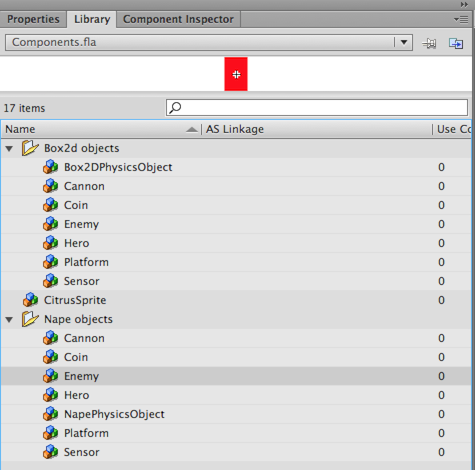
- Duplicate Components.fla to your project folder and rename it to for instance Level1.fla
- Open Level1.fla in Flash Pro and start designing your level
- Place some of the components on stage (blue is an instance of Hero, green = Sensor, grey = platform)
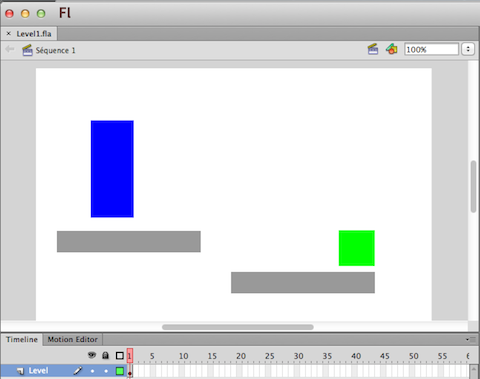
- Now you can define the look and feel for each of the objects on stage using Properties panel. I’ve defined the view parameter, which will basically load and include an image on stage. It can be also an animation. You can define and change all these parameters manually later on in the code.
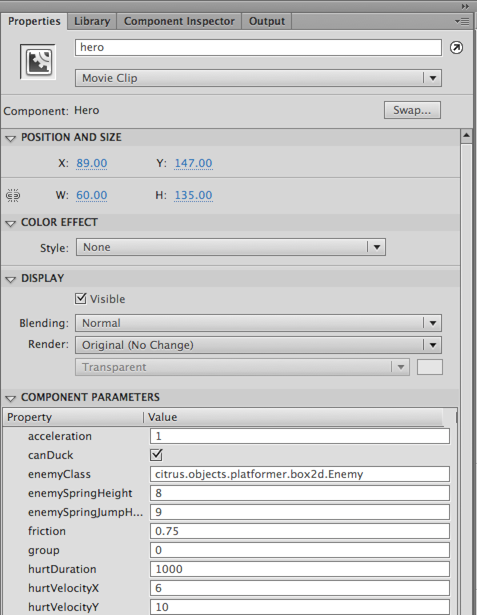
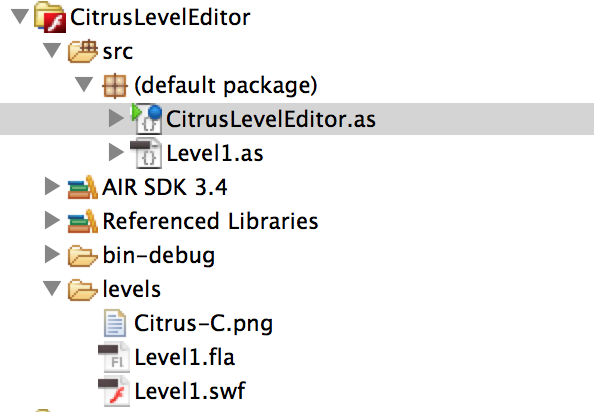
- Create a new Flash Builder ActionScript Project, create a folder called levels and copy your Level1.fla there. The folder structure should look like this. Let’s add some code and Level1 Class in the next steps.
- In Project -> Properties -> ActionScript Build Path add Citrus SWC library (e.g. CEV3-1-1-Starling-Box2D.swc)
- In the main class, load Level1.swf and initialize our through Level1 class that we create. The main class needs to extend StarlingCitrusEngine.
import citrus.core.starling.StarlingCitrusEngine;

[SWF(frameRate="60",width="1024",height="768")]
public class CitrusLevelEditor extends StarlingCitrusEngine
{
	public function CitrusLevelEditor()
	{
		setUpStarling(true);

		var loader:Loader = new Loader();
		loader.contentLoaderInfo.addEventListener(Event.COMPLETE, _levelLoaded);
		loader.load(new URLRequest("../levels/Level1.swf"));
	}
	private function _levelLoaded(evt:Event):void {
		state = new Level1(evt.target.loader.content);

		evt.target.removeEventListener(Event.COMPLETE, _levelLoaded);
		evt.target.loader.unloadAndStop();
	}
}
- Create a new class called Level1 that extends StarlingState. Map level to a variable, set objectsUsed, this will just import necessary classes that we use in our game. Create physics and add them to level. Using ObjectMaker2D create the level from a MovieClip that we loaded (Level1.swf).
import flash.display.MovieClip;
import citrus.core.starling.StarlingState;
import citrus.objects.platformer.box2d.Hero;
import citrus.objects.platformer.box2d.Platform;
import citrus.objects.platformer.box2d.Sensor;
import citrus.physics.box2d.Box2D;
import citrus.utils.objectmakers.ObjectMaker2D;

public class Level1 extends StarlingState
{
	protected var level:MovieClip;

	public function Level1(_level:MovieClip)
	{
		super();
		level = _level;
		var objectsUsed:Array = [Hero, Platform, Sensor];
	}

	override public function initialize():void{
		super.initialize()

		var physics:Box2D = new Box2D("physics");
		physics.visible = true;
		add(physics);

		ObjectMaker2D.FromMovieClip(level);
	}
}
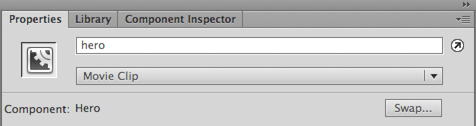
- To change the behavior of the hero give the object a name in the Properties panel of Flash Pro. This name should be unique across your level. Use getObjectByName(name:String) function to retrieve any object in your level.
hero = getObjectByName("hero") as Hero;
hero.acceleration = 0.2;
- To register a signal (event) on the sensor
var sensorGate:Sensor = getObjectByName("sensorGate") as Sensor;
sensorGate.onBeginContact.add(sensorGateOnBeginContact);
- Create a function that will be called when hero touches the sensor.
private function sensorGateOnBeginContact(contact:b2PolygonContact):void
{
	trace("Sensor touched");
}
- Also if you open a component, and see the 1st frame, you can predefine some of the default values programatically.
var className = "citrus.objects.platformer.box2d.Enemy";
var params = {
    view: "characters/enemy.swf",
    leftBound: -300
}
In the next part, we will discuss the animations, the parallax and the camera features.
Adobe Game Jam coming to Hamburg in February
January 15th, 2013
That’s right, starting Friday 15th February till Saturday 16th February 2013 Adobe is holding a Game Jam at Adobe Office in Hamburg.
Register here | Read more about Adobe Game Jams
This event is happening right after Casual Connect Europe (12-14 February 2013) so you could connect these two gaming events together if you’d like.
Game Jams are usually a lot of fun, meeting new people, coding something crazy and basically having a great time.
Checkout some of the videos from the last two Adobe Game Jams:
In the past, Adobe Flash was widely utilized to create browser-based games, such as casino games. However, it has now reached its end of support. Despite this, you can still find a plethora of fantastic casino sites that offer top-notch gaming experiences at https://sciencetrends.com/. Check it out and discover some of the most exciting and trustworthy online casinos on the web!
Adobe Game Jam Chicago:
Adobe Game Jam San Fracisco:

Adobe Game Jam Chicago - November 30th 2012
November 2nd, 2012
 After a packed game jam in Adobe San Francisco office we are moving forward to Chicago.
This time we are going to jam at Nerdery.
Register here and have some fun with us.
Watch the video we shot last time.
More general info about Adobe Game Jam.
CityVille 2 launched today powered by Flare3D/Stage3D
November 1st, 2012
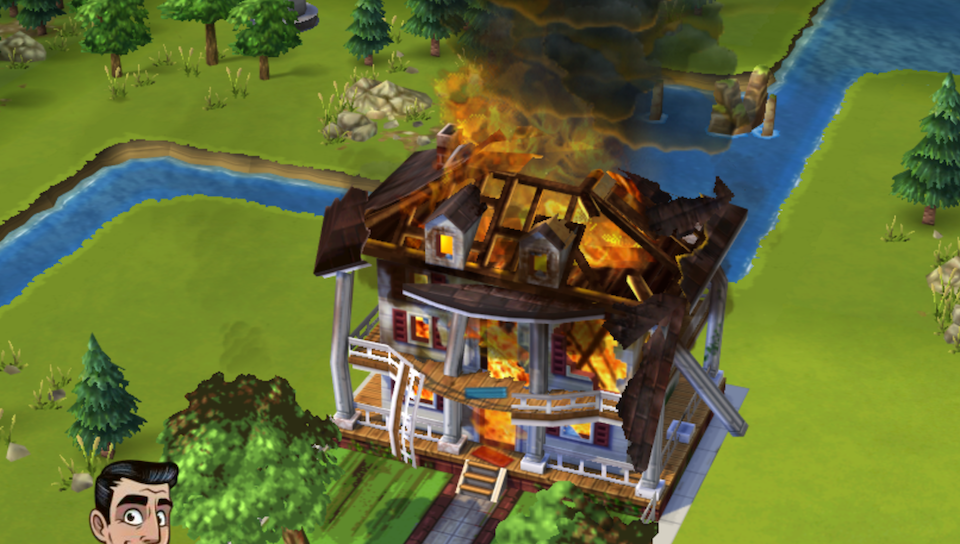
Zynga’s CityVille got a new 3D face and launched today in a follow up version! The game is built with the next generation of Flare3D engine, which is powered by Stage3D/Flash technology.
You can play the game here http://apps.facebook.com/cityville-two/. In contrast, if you want to try your luck in sports betting, check Voetbal247 bookmakers, which are known for their expertise in sports betting and providing odds for various football matches.
I gotta run now, because my house is on fire!
Stage3D, Starling, Away3D developer job offers
October 8th, 2012
Are you looking for someone to join your game developers team? Need skills like Stage3D, Starling, Away3D or other frameworks?
Post your offer into these two official Jobs forums:
Starling Jobs Forum
Away3D Jobs Forum
If you are looking for a job, these will be the places to look at in the future.
Adobe Game Jam San Francisco!
September 27th, 2012
 Adobe is running the first official Game Jam in San Francisco and you are invited to join us!
The Game Jam will be held in the Adobe Office San Francisco (Townsend 601) and will kick-off on Friday (19th October 2012) around 4 PM and end on Saturday evening (20th October 2012).
The event is free to attend; snacks and beverages will be provided.
Let’s build some great Stage3D games together! Lee Brimelow, Renaun Erickson, Thibault Imbert and I will be there the entire time. We are looking forward to see you.
Visit Adobe Game Jams webpage for more information and registration.
You can also read Renaun’s blog post and Lee’s blog post about the game jam.
Square Enix RPG from Japan in Flash/Stage3D
September 25th, 2012
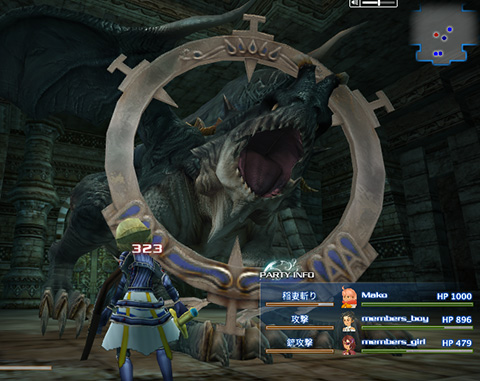
Square Enix just launched a playable online teaser of their upcoming Stage3D based RPG game.
The game is built using Alternativa 3D engine.
Watch the video showing the sneak peek: